IMAGINE: Inclusive and Motivating Learning with AI, Digital Tools and STEAM
26-30 October 2026 | Lithuania, Vilnius
Create more inclusive, motivating and innovative learning experiences by combining student wellbeing, AI, digital tools and STEAM education.
Erasmus+ Teacher Training Course
Erasmus+ Teacher Training Course
What if every student could feel included, motivated and inspired to learn?
Today's teachers are expected to create learning environments that are not only effective, but also inclusive, engaging, creative and future-oriented.
Teachers work with increasingly diverse groups of learners and need practical ways to:
respond to different learning needs;
support students' social and emotional wellbeing;
maintain motivation and active participation;
use AI and digital technologies meaningfully;
create practical and interdisciplinary learning experiences;
connect classroom learning with real-life challenges.
IMAGINE brings these elements together in one practical Erasmus+ training course.
During the course, participants will explore how inclusive education, student wellbeing, motivation, artificial intelligence, digital tools and STEAM can work together to create learning experiences in which students actively participate, collaborate and take ownership of their learning.
Four Key Pillars of the Course
01 — INCLUSION & WELLBEING
Creating learning environments where everyone can belong
Inclusive education starts with understanding that students have different needs, experiences, abilities and ways of learning.
Participants will explore the relationship between inclusion, student wellbeing and successful learning and discover strategies for creating safe, supportive and positive learning environments.
You will explore:
Inclusive education in Lithuania and internationally
Diverse learner needs
Student social and emotional wellbeing
Safe and supportive learning environments
Positive relationships in the classroom
The teacher's role in inclusion
Collaboration with colleagues, families and the wider community
Key question:
How can we create a classroom where every learner feels seen, supported and able to participate?
02 — MOTIVATION & AI
Using technology to make learning more engaging and personalised
Artificial intelligence and digital tools are changing the way teachers plan, teach and assess learning.
This part of the course focuses not simply on using technology, but on using it purposefully to increase student motivation, participation and learning outcomes.
You will explore:
Teacher attitudes and their influence on student motivation
Active and student-centred learning
Experiential learning strategies
AI-supported lesson planning
Personalised learning and differentiation
AI for creative learning tasks
AI-supported student feedback
Digital tools for quizzes and collaboration
Gamification
Formative assessment and meaningful feedback
Key question:
How can AI and digital tools help us move from passive learning to active participation?
03 — STEAM & EXPERIENTIAL LEARNING
Turning real-life challenges into learning opportunities
STEAM education provides opportunities to connect different subjects, develop creativity and encourage students to solve authentic problems.
Participants will experience STEAM not only as a concept, but as a practical, collaborative and interdisciplinary approach to teaching.
You will explore:
Principles of quality STEAM education
Experiential learning
Problem-based learning
Interdisciplinary teaching
Real-world challenges
Creative problem solving
Collaborative learning
Designing practical STEAM activities
The “Vilnius is a School” approach
Participants will work in international teams to design a STEAM learning activity around a real-life challenge, present their ideas and receive feedback from peers.
Key question:
How can we transform real-life problems into meaningful learning experiences?
04 — LEARNING FROM PRACTICE
From theory to a real educational environment
One of the strongest elements of the course is the opportunity to see innovative educational approaches in practice.
Participants will visit a school in Vilnius and observe how teachers work with learner diversity, motivation, active learning, STEAM and digital tools.
During the school visit, participants will:
Observe lessons and educational activities
Explore inclusive teaching practices
Observe STEAM activities in practice
Analyse student engagement and active learning
Discuss innovative teaching methods with local teachers
Exchange good practices
Explore how digital tools are integrated into learning
Reflect on practices that could be transferred to their own schools
Key question:
What can we learn from real classrooms and take back to our own schools?
Course Programme
Day 1 – Inclusive Education & Student Wellbeing
Goal: Understanding the connection between inclusion, student wellbeing and successful learning.
Activities:
Inclusive education in Lithuania and worldwide
The connection between inclusion, student wellbeing and learning
Creating safe, supportive and positive learning environments
Recognising diverse learner needs
Supporting students' social and emotional wellbeing
The teacher's role in creating inclusive learning environments
Collaboration and community engagement
Guided exploration of Vilnius Old Town
Learning Outcomes: participants understand the importance of inclusive education and student wellbeing and identify practical strategies for creating supportive and positive learning environments.
Day 2 – Student Motivation: AI & Digital Tools in the Classroom
Goal: Exploring practical strategies and technologies that increase student motivation, engagement and active participation.
Activities:
Teacher attitudes and leadership and their impact on student motivation
Active, experiential and student-centred learning strategies
Using artificial intelligence to create personalised and engaging learning experiences
Practical exploration of AI tools for lesson planning
AI-supported differentiation and creative learning tasks
Using AI for student feedback
Interactive educational apps and digital tools
Quizzes, collaboration and gamification
Digital tools for formative assessment
Feedback strategies that help students recognise their progress
Learning Outcomes: participants discover practical ways to use AI and digital tools to personalise learning, increase engagement and provide meaningful feedback.
Day 3 – STEAM in Action: Experiential & Collaborative Learning
Goal: Applying STEAM approaches to create engaging, inclusive and interdisciplinary learning experiences.
Activities:
Key principles of quality STEAM education
STEAM through experiential and problem-based learning
Practical STEAM activity inspired by the “Vilnius is a School” approach
International teamwork
Designing a STEAM activity around a real-life challenge
Presentations and peer feedback
Reflection and sharing of ideas
Learning Outcomes: participants develop practical ideas for integrating STEAM, experiential learning and real-world challenges into their teaching practice.
Day 4 – Learning from Practice: School Visits
Goal: Observing classroom management in real educational settings.
Activities:
School visit in Vilnius
Observation of lessons and educational activities
Observation of STEAM activities in practice
Exploring approaches to learner diversity and student engagement
Analysis of active and experiential learning practices
Discussion with local teachers and school staff
Exchange of good practices
Exploring the use of digital tools and innovative teaching methods
Learning Outcomes: participants observe how inclusive, motivating and STEAM-based approaches are implemented in a real educational environment and identify ideas that can be adapted to their own schools.
Day 5 – Cultural Learning Experience
Participants will travel from Vilnius to the historic town of Trakai and explore one of Lithuania's most important cultural and historical sites.
Activity:
Visit to Trakai Island Castle
Exploration of the history and cultural significance of Trakai
Cultural experience around Lake Galvė
Tasting traditional Lithuanian kibinai pastries
Informal networking and intercultural exchange
Reflection on the role of cultural experiences in personal wellbeing
What You Will Gain?
By the end of the course, you will:
✔️ Understand the connection between inclusion, wellbeing and successful learning
✔️ Recognise diverse learner needs and develop more supportive learning environments
✔️ Apply practical strategies to increase student motivation and engagement
✔️ Use AI tools to support lesson planning, differentiation and creative learning
✔️ Explore digital tools for collaboration, gamification and formative assessment
✔️ Apply STEAM approaches to experiential and problem-based learning
✔️ Design interdisciplinary learning activities around real-life challenges
✔️ Exchange good practices with teachers from other European countries
✔️ Observe innovative teaching approaches in a real Lithuanian school
✔️ Develop practical ideas that can be adapted to your own educational context
From Learning to Impact
The course is designed to create an impact beyond the training week.
Participants return to their schools with practical ideas, tools and approaches that can be immediately adapted to their own educational context.
The course supports:
More inclusive classrooms
Better recognition of diverse learner needs and stronger support for student wellbeing.
More motivated learners
Practical approaches for increasing participation, engagement and ownership of learning.
Smarter use of technology
Meaningful applications of AI and digital tools in everyday teaching.
More innovative learning
STEAM, experiential, collaborative and problem-based learning approaches.
Stronger European cooperation
Exchange of experiences and good practices with teachers from different educational contexts.
Learning Methodology
This is a practice-oriented Erasmus+ course.
Rather than focusing only on theory, participants will learn through:
Practical Activities
Explore tools and strategies that can be transferred directly to the classroom.
International Teamwork
Work with teachers from different countries and exchange perspectives.
Reflection
Connect new approaches with your own teaching experience.
Learning from Practice
Observe real educational practices during a school visit.
Experiential Learning
Experience inclusion, AI, digital learning and STEAM approaches as a learner.
Cultural Learning
Discover Vilnius and Trakai while developing intercultural understanding.
Who Is This Course For?
This course is designed for:
Teachers of different subjects and age groups
Primary and secondary school teachers
VET teachers and trainers
Educational support specialists
School coordinators and education professionals
Teachers interested in AI and digital education
Teachers interested in STEAM education
Professionals working with inclusion and student wellbeing
No advanced technical knowledge of AI or STEAM is required.
Course Lecturers
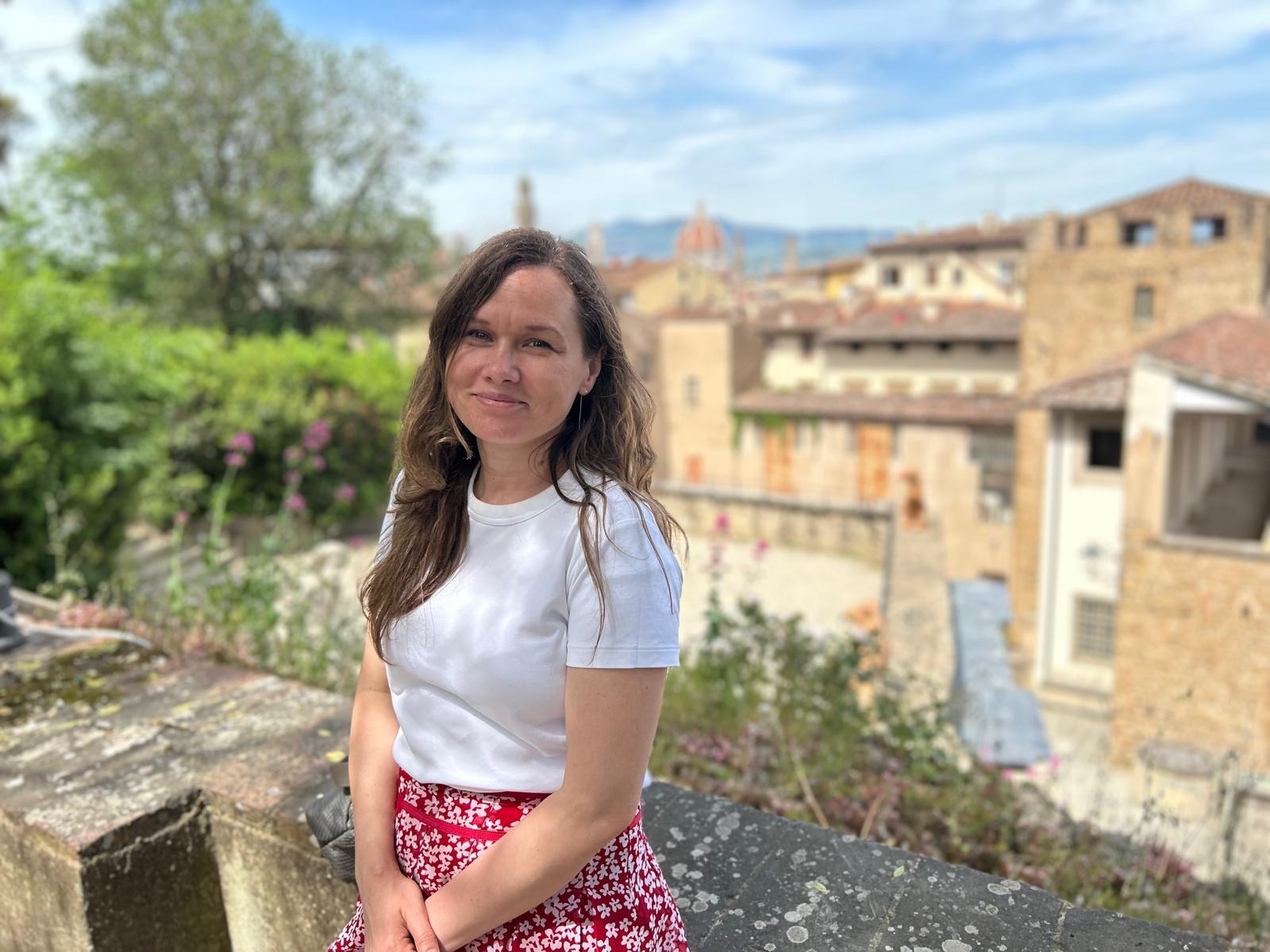
Neringa Grigorjeva
Educator, seminar lecturer, training developer, coordinator of national and international projects, and author of Non-formal Education: Towards Entrepreneurship.

Kamilė Borkovskienė
Educational psychologist, psychoanalytic child and adolescent psychotherapist, experienced lecturer working with teachers and parenting groups.
Why Choose Baltic Mobility?
✔️ 10+ years of Erasmus+ expertise
✔️ Strong cooperation with Lithuanian educational institutions
✔️ Practice-oriented and interactive methodology
✔️ Combination of inclusion, wellbeing, AI, digital education and STEAM
✔️ Real-life learning experience through a school visit
✔️ International teamwork and good-practice exchange
✔️ Cultural programme in Vilnius and Trakai
✔️ Small group learning experience
Practical Information
📍 Location: Vilnius, Lithuania
📅 Dates: 26–30 October 2026
⏳ Duration: 5 days
🎓 Certificates: Europass Mobility + Baltic Mobility Certificate
Ready to IMAGINE a New Way of Learning?
Inclusion. Motivation. STEAM. AI.
Join teachers from across Europe and discover how these four elements can come together to create more inclusive, motivating and innovative learning experiences.
Bring new ideas back to your classroom.
Baltic Mobility info
Phone number +37067063273
Email info@balticmobility.com
Address Pylimo str. 35, Vilnius LT01309, Lithunia
OID E10400977
© 2025. All rights reserved.